This post contains affiliate links marked with (*). If you buy through them, I may earn a small commission at no extra cost to you. As an Amazon Associate I earn from qualifying purchases. More on how CineThursday is funded
Francis Ford Coppola’s Godfather trilogy is one of the great milestones of film history. Based on Mario Puzo’s 1969 novel, it spans three generations of power, loyalty and the dark side of the American Dream.
Its Oscar record is unique: Part I won three Academy Awards, Part II won six – both including Best Picture. Part III went home empty-handed despite seven nominations. That makes The Godfather the only trilogy in which every film was nominated for Best Picture.
This ranking counts up from the weakest to the best film. I judged each one on story, character development, direction – and, honestly, gut feeling. New in this update: every film gets a rating out of 10.
The Godfather Part III (1990)
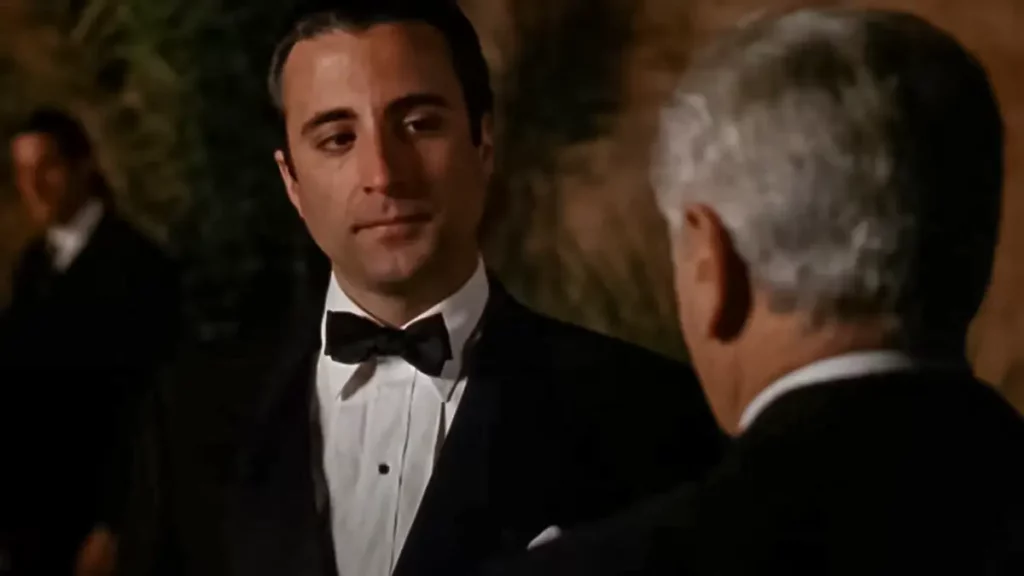
New York, 1979: Michael Corleone (Al Pacino) is determined to finally take the family legitimate. A billion-dollar deal with the Vatican Bank is supposed to pave the way – but betrayal, old enemies and his hot-headed nephew Vincent (Andy Garcia) keep dragging him back. Just when he thought he was out, they pull him back in.
What works: The strongest scene is Michael’s confession to Cardinal Lamberto, in which he finally admits to ordering the murder of his brother Fredo – Pacino is devastating here. His tentative reconciliation with Kay (Diane Keaton) in Sicily is moving, too. And Michael’s diabetes works as a quiet metaphor: his body is breaking down just as his soul did long ago. Andy Garcia even earned an Oscar nomination for his role.
What doesn’t: The biggest loss is Robert Duvall’s absence as Tom Hagen. He turned the film down because he was offered only a fraction of Pacino’s salary. Then there’s the casting of Michael’s daughter Mary: Winona Ryder was set to play her but dropped out just before shooting – Coppola cast his daughter Sofia instead, who visibly struggles in the role.
The script feels rushed as well. Many subplots are underdeveloped, and several callbacks to the earlier films feel more like fan service than fresh ideas. The finale during the opera Cavalleria rusticana in Palermo is beautifully edited, but so overloaded that it confuses more than it grips.
The 2020 recut: For the film’s 30th anniversary, Coppola re-edited it under the title he and Puzo had originally wanted: The Godfather, Coda: The Death of Michael Corleone. At 157 minutes it’s slightly shorter, opens with Michael’s negotiations at the Vatican and has a new, quieter ending. It doesn’t fix the biggest flaws, but the story feels clearer. [Optional: eigener Satz, falls du den Coda gesehen hast]
My verdict on Part III: Worth watching for fans who want to see Michael’s story through to the end – but it never reaches the intensity of its predecessors.
The Godfather Part II (1974)
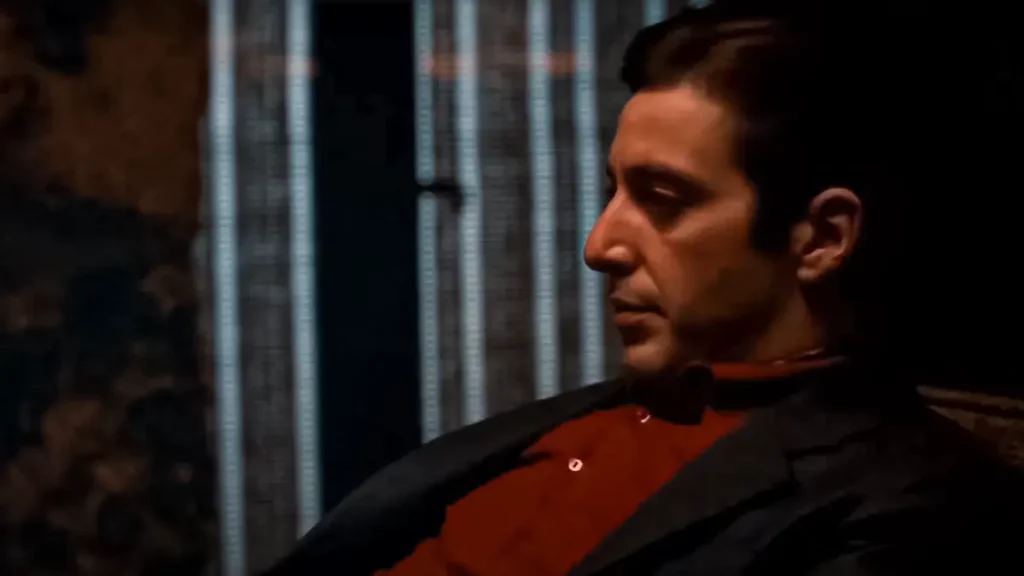
The Godfather Part II is both sequel and prequel. It tells two stories in parallel: the young Vito Corleone (Robert De Niro), who flees Sicily as a child and works his way up in New York – and Michael (Al Pacino), who in the late 1950s tries to hold on to and expand the family empire from Lake Tahoe.
That structure is what makes the film so powerful. Vito’s rise is warm; he builds everything for his family. Michael, by contrast, rules coldly and alone – and loses everything he set out to protect. De Niro plays the young Vito with such nuance that he won the Oscar for Best Supporting Actor, despite speaking almost entirely in Sicilian. The supporting cast is excellent too: Lee Strasberg as mob boss Hyman Roth, Michael V. Gazzo as Frank Pentangeli and Bruno Kirby as the young Clemenza.
So many moments stay with you: the planning of the hits, Michael’s kiss for Fredo on New Year’s Eve in Havana, the Senate committee hearing. Above all, there’s the fight with Kay (Diane Keaton): she reveals that her supposed miscarriage was actually an abortion – she refused to bring another child into Michael’s world. The final flashback to the 1941 birthday dinner already shows how alone Michael will end up.
Why only #2: Michael’s storyline repeats several beats from Part I – negotiations at family celebrations, surviving assassination attempts. The relentlessly bleak mood can wear you down over 202 minutes. And Michael is already hardened here; the great transformation that makes the original so gripping is missing.
Still, Part II made history: with six Oscars from eleven nominations, it became the first sequel ever to win Best Picture. For me, it sits just behind the original.
The Godfather (1972)
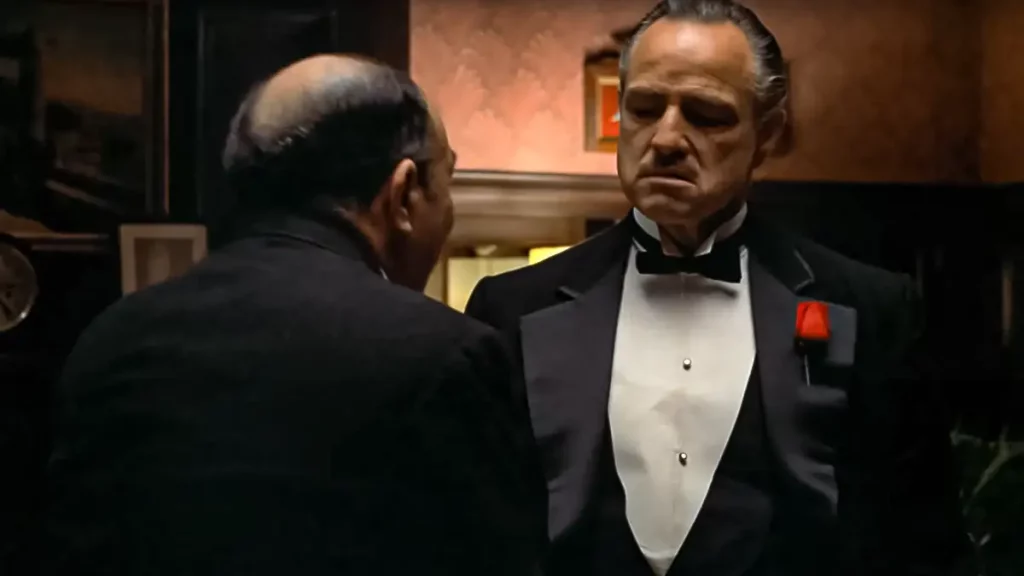
New York, 1945: during his daughter’s wedding, Don Vito Corleone (Marlon Brando) receives petitioners in his study. The undertaker’s opening monologue, begging for justice for his daughter, shows right away how this world works. After an attempt on Vito’s life, it falls to his youngest son Michael (Al Pacino) – the war hero who wanted nothing to do with the family business – to save the family.
Michael’s transformation is the heart of the film. He goes from outsider at the wedding table to the man who shoots two enemies in a restaurant and, in the end, coldly has every rival wiped out. Brando’s Vito stands for family and honor, James Caan’s Sonny is the hot-headed counterpart, and Diane Keaton’s Kay gives us the outsider’s view. The final shot of the door closing on Kay says more than any line of dialogue.
Then there are the scenes that have long since become pop culture: the horse head in the bed, Sonny’s death at the toll booth, the baptism intercut with Michael’s men eliminating his rivals. Compared to Part II, the original is tighter, more emotionally varied and, for me, more rewatchable.
If I have to find weaknesses, they’re minor: the Sicily section noticeably slows the pace, and Kay stays on the sidelines for a long time.
It was a massive success: made for around $6 million, the film grossed over $250 million worldwide and won three Oscars – Best Picture, Best Adapted Screenplay and Best Actor for Brando, who refused the award in protest against Hollywood’s treatment of Native Americans. For me, The Godfather remains unmatched.
Conclusion: An Original No One Has Matched
The Godfather trilogy is a study of power, family and loss. In my ranking, the 1972 original edges out Part II, while Part III falls clearly behind – even in the 2020 Coda cut.
What ties all three films together is Coppola’s direction and a cast that made film history: Brando, Pacino and De Niro. If you haven’t seen the trilogy yet, start with Part I and watch Part II right after.
Which Godfather movie is your favorite? Let me know in the comments.
FAQ
This post contains affiliate links marked with (*). If you buy through them, I may earn a small commission at no extra cost to you. As an Amazon Associate I earn from qualifying purchases. More on how CineThursday is funded